5 Psychology-Backed Hooks That Stop the Scroll [Real Examples Included]
Updated February 18, 2026
Somewhere right now your ideal client just scrolled past something you spent two hours writing. Didn't stop. Didn't read. Didn't even blink.
It wasn't the algorithm. It wasn't your niche. It wasn't even the topic.
It was the first sentence.
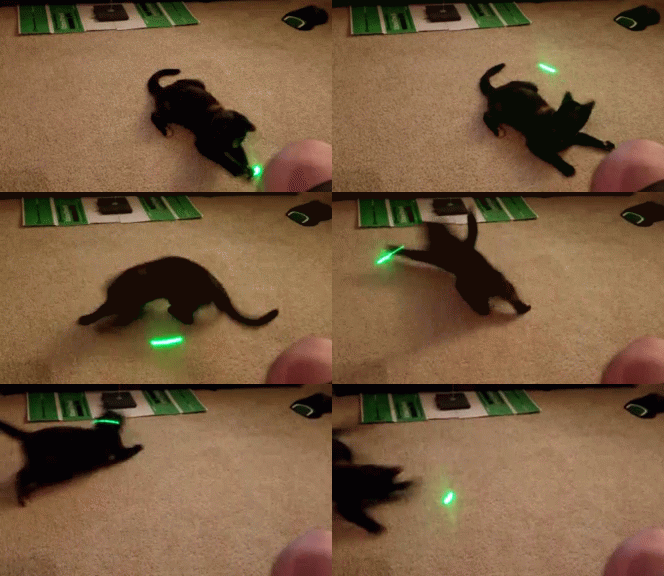
A great hook doesn't ask for attention — it takes it. It opens a loop in your reader's brain that they physically cannot ignore until it closes. That's not a metaphor. That's psychology, baby. And it's the difference between content that converts and content that disappears faster than a cat chasing a laser pointer as soon as you hit publish.
Most small business owners spend hours on the content and approximately zero seconds on the first sentence. You can have the most useful post on the internet, the most irresistible offer, the most beautiful website — none of it matters if the first line doesn't stop the scroll.
The good news? It's a skill. And you're about to get really good at it.
What's a Hook Actually Doing?
Before we get into the types, let's talk about what's happening in someone's brain when a great hook lands.
There's a psychological principle called the Curiosity Gap — the uncomfortable tension that happens when your brain realizes there's something it wants to know but doesn't yet. It's the same thing that keeps you watching a Netflix episode at midnight when you have a 7am meeting. Your brain opened a loop and it physically cannot rest until that loop closes.
A great hook opens that loop in the first sentence. Everything after it is just your reader chasing the close.
There are six ways to do it. Here they are — with real examples from brands that do it brilliantly.
1. The Threat, Warning, or Pain Hook
This one works because your brain is hardwired to prioritize threats. It's not manipulation — it's biology. When something feels like a warning, attention snaps to it instantly.
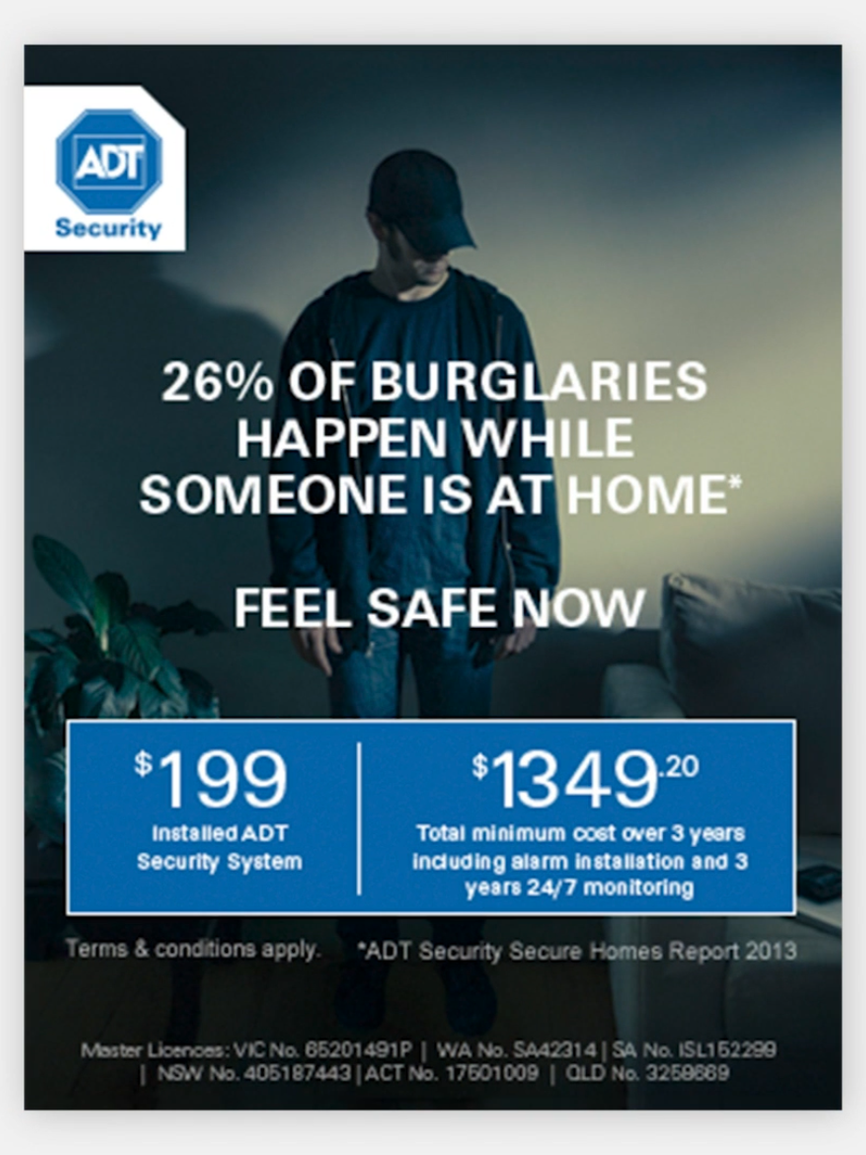
Real example: ADT Security ran an ad that said: "26% of burglaries happen while someone is at home. Feel safe now."
That's it. That's the whole hook. A statistic that makes your stomach drop, followed by the most pointed statement in advertising history. You can't read that and keep scrolling. Your brain won't let you.
Pacific Blue Cross did the same thing with a billboard designed to look like a hazard sign: "You are now entering a high-cost medical zone. Use caution." Nobody reads "use caution" and thinks eh, probably fine.
How to use it for your business:
You don't have to be dramatic and fear-mongering. You just have to name the real consequence of ignoring the problem you solve.
"Most small business websites are actively repelling the clients they're trying to attract."
"Every week you post without a content strategy is a week you're training the algorithm to ignore you."
"Your website has about 7 seconds to make someone stay. Is yours using them?"
2. The Education & FYI Hook
This one works because humans are genuinely curious creatures — and a surprising statistic or fact creates an instant curiosity gap. The more unexpected the number, the harder it hits.
Real example: Acorns, the investment app, ran this: "41.29% of millennials spend more on coffee than their retirement accounts."
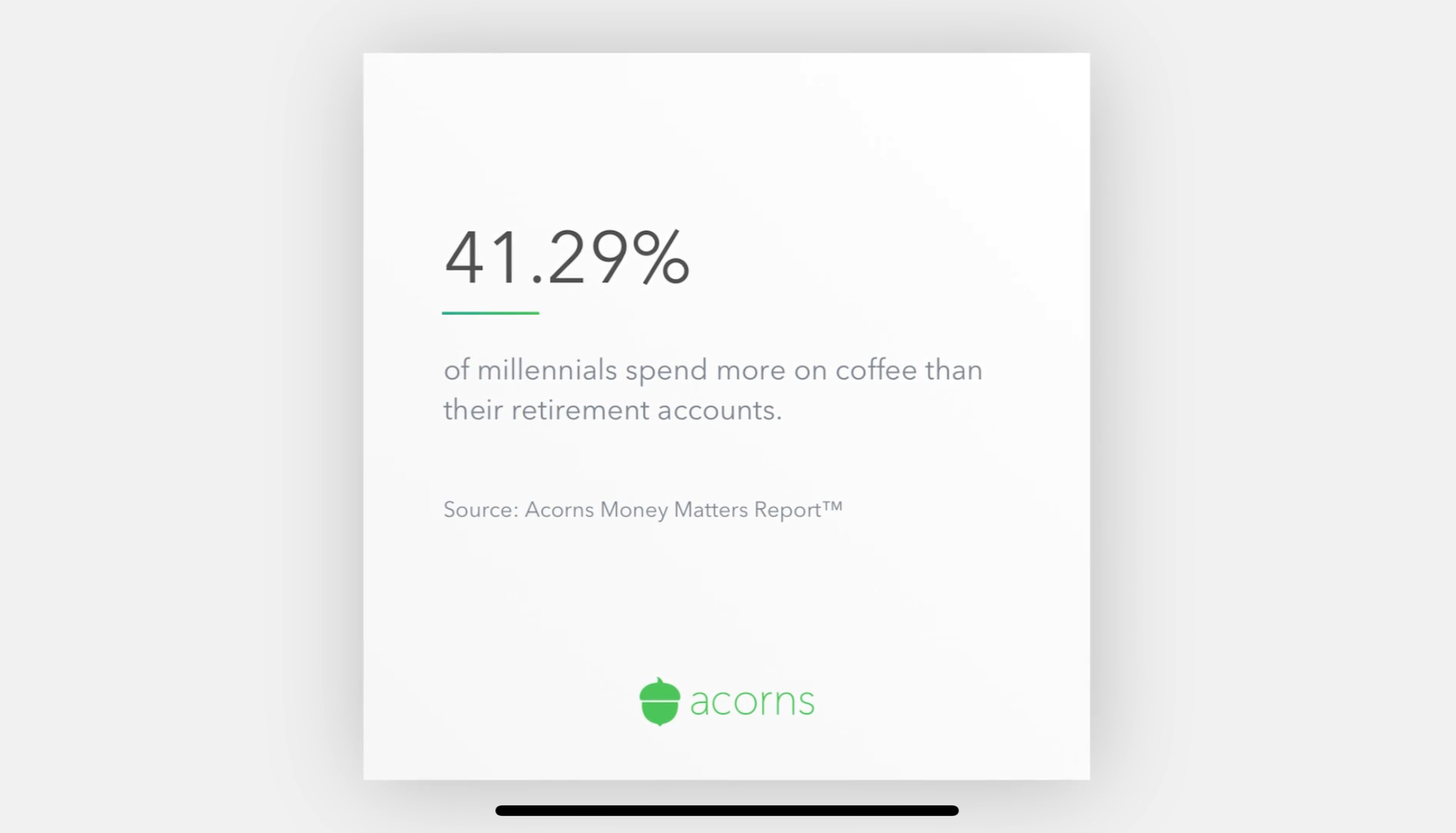
Look at that number. 41.29%. Not "about 40%" or "nearly half." 41.29. The specificity makes it feel like a discovery, not a marketing line. And the comparison — coffee vs. retirement — is the gut punch that makes you either laugh or wince depending on how much you spent at on your double venti extra foamy soy matcha macchiato at Starbucks this morning.
How to use it for your business:
Find a statistic about your industry that would genuinely surprise your ideal client — then lead with it.
"The average family spends 32,591 seconds a week on their couch"
"Businesses that blog consistently generate 67% more leads than those that don't."
"63% of large breed dog owners say they regret not buying pet insurance."
Specific, surprising, and suddenly they need to know what to do about it. That's the formula.
3. The Confirm Their Beliefs Hook
This is the sneakiest one on the list — and one of the most powerful. Instead of introducing something new, you validate something your reader already suspects is true. They feel seen. They feel understood. And they immediately trust you.
Real example: Organixx ran a Facebook ad that opened with: "Many women know that hormonal imbalance can wreak havoc on their health. It's usually the reason why some women feel so tired, moody, and irritable all the time."
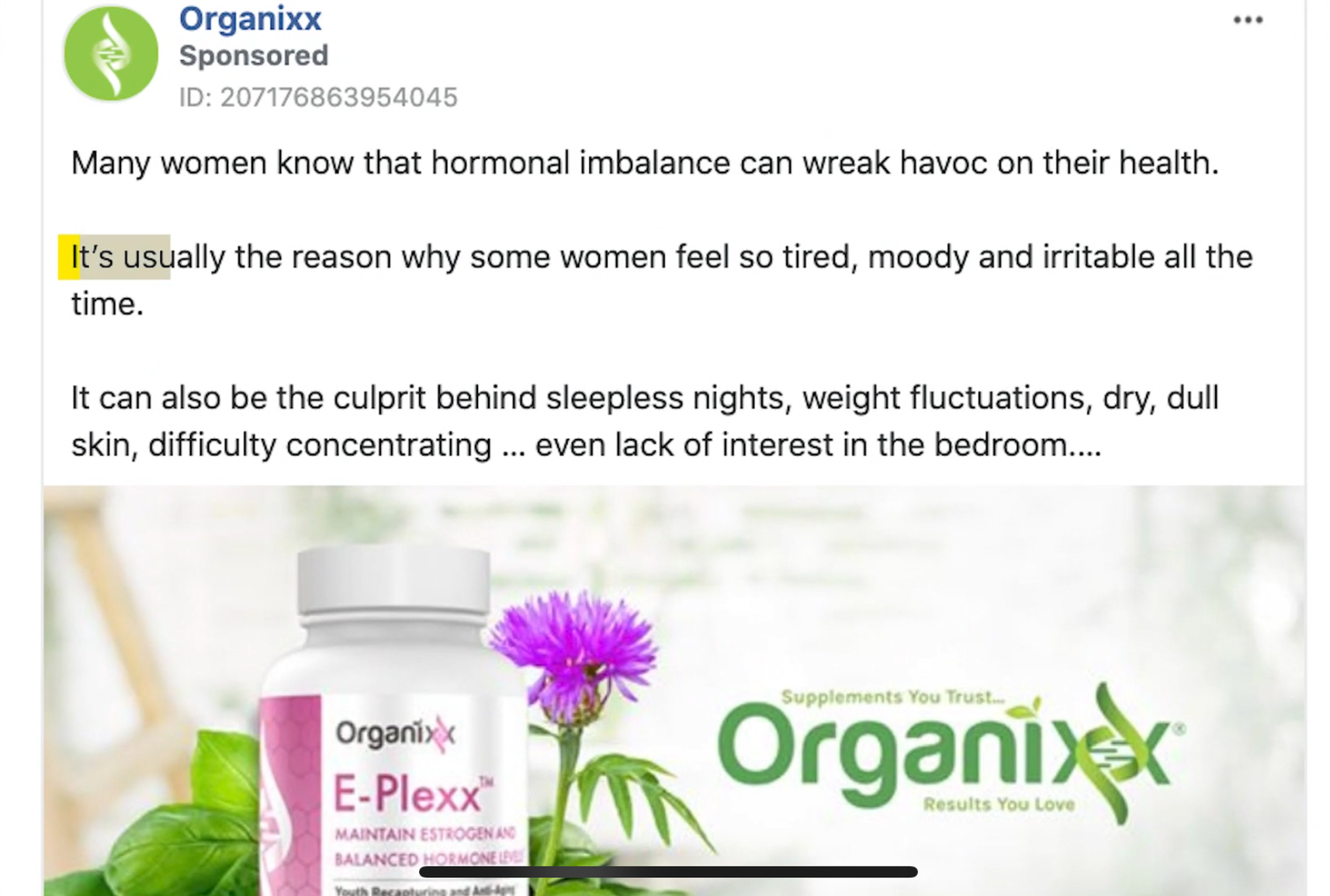
Nobody reading that thinks hm, interesting theory. They think YES. FINALLY. Someone gets it. The hook doesn't teach them anything new — it mirrors back what they already believe, and that creates an immediate emotional bond.
How to use it for your business:
Think about what your ideal client already believes — or suspects — about their situation. Then say it back to them.
Fitness/wellness - "Most people don't quit their workout routine because they're lazy. They quit because nobody told them the truth about what actually works."
Real estate - "Most buyers spend months looking at houses before they realize they've been searching for the wrong thing."
Nutritionist - "You’re not stuck at your weight because you’ve plateaued. You’re just counting your macros wrong."
4. The FOMO Hook
Nobody wants to be the last one to know about something. Nobody wants to be left behind while everyone else figures it out. FOMO is a primal human response and it works every single time when it's done right.
Real example: Blinkist tweeted: "Millions of tech-savvy intellectuals are using Blinkist to stay ahead of their peers and on top of their fields."
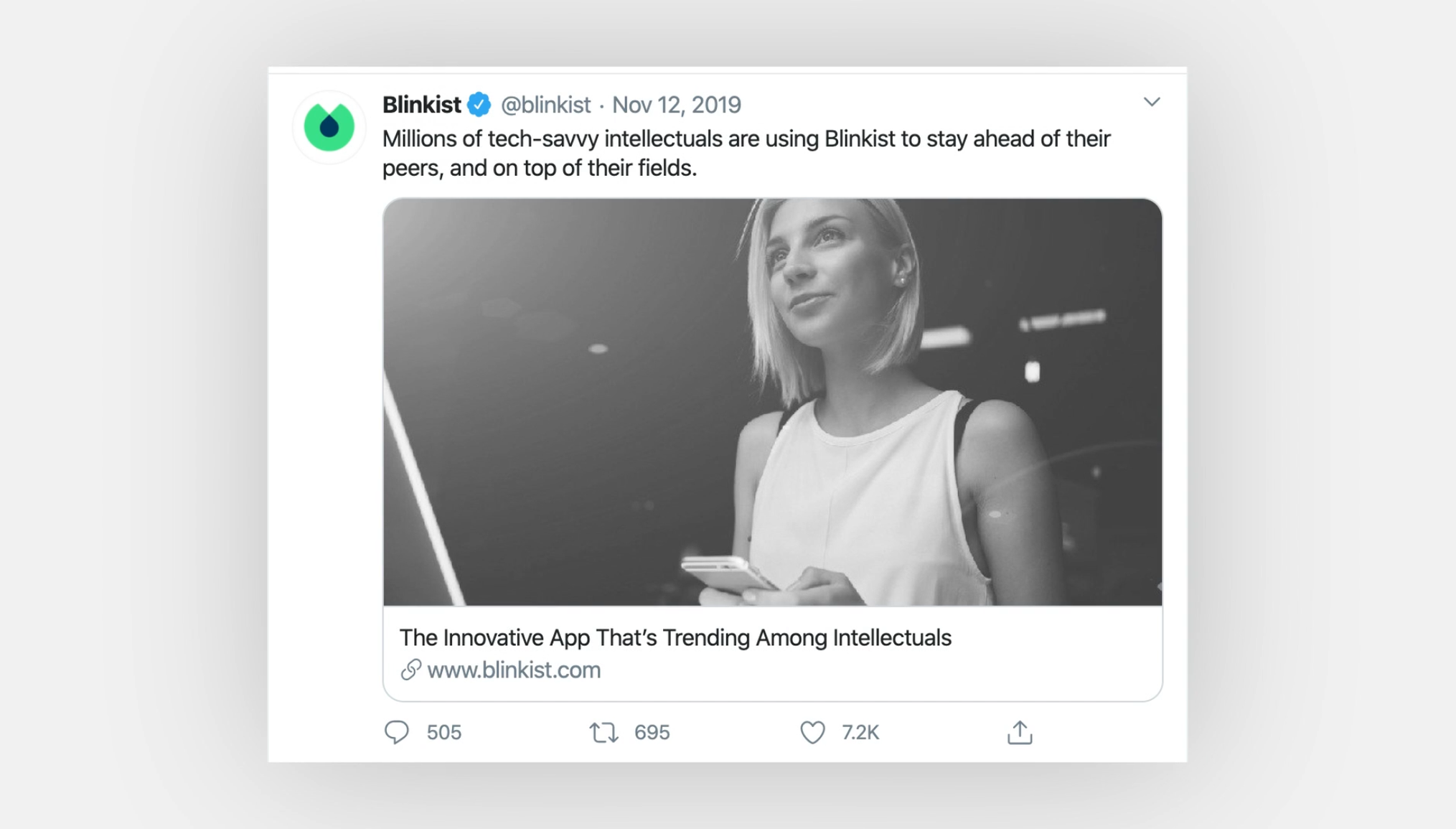
Notice what that hook is doing: it's not just saying "this app is useful." It's saying the smart people are already doing this. It positions the reader as either in the group or out of it — and nobody wants to be out of it.
LiveRecover used a different version of the same psychology with: "Who else wants to recover 21% of abandoned carts?" The "who else" implies a crowd of people already getting the result. You're late. Get in.
How to use it for your business:
Acupuncture - "The moms who are finally sleeping through the night didn't find a new supplement or a better white noise machine. They tried acupuncture."
Financial advisor - "The people retiring comfortably aren't necessarily earning more than you. They just started [doing this one thing] earlier."
Business coach - "The entrepreneurs who hit six figures didn't hustle harder than you. They stopped trying to figure it out alone."
5. The Relevancy Hook
This is the hook that meets people exactly where they are — in this culturally relevant moment, in this news cycle. It says I see you right now and that immediacy is impossible to ignore.
Real example: Excedrin ran an ad during election season that said: "73% of Americans will have an election headache this year."
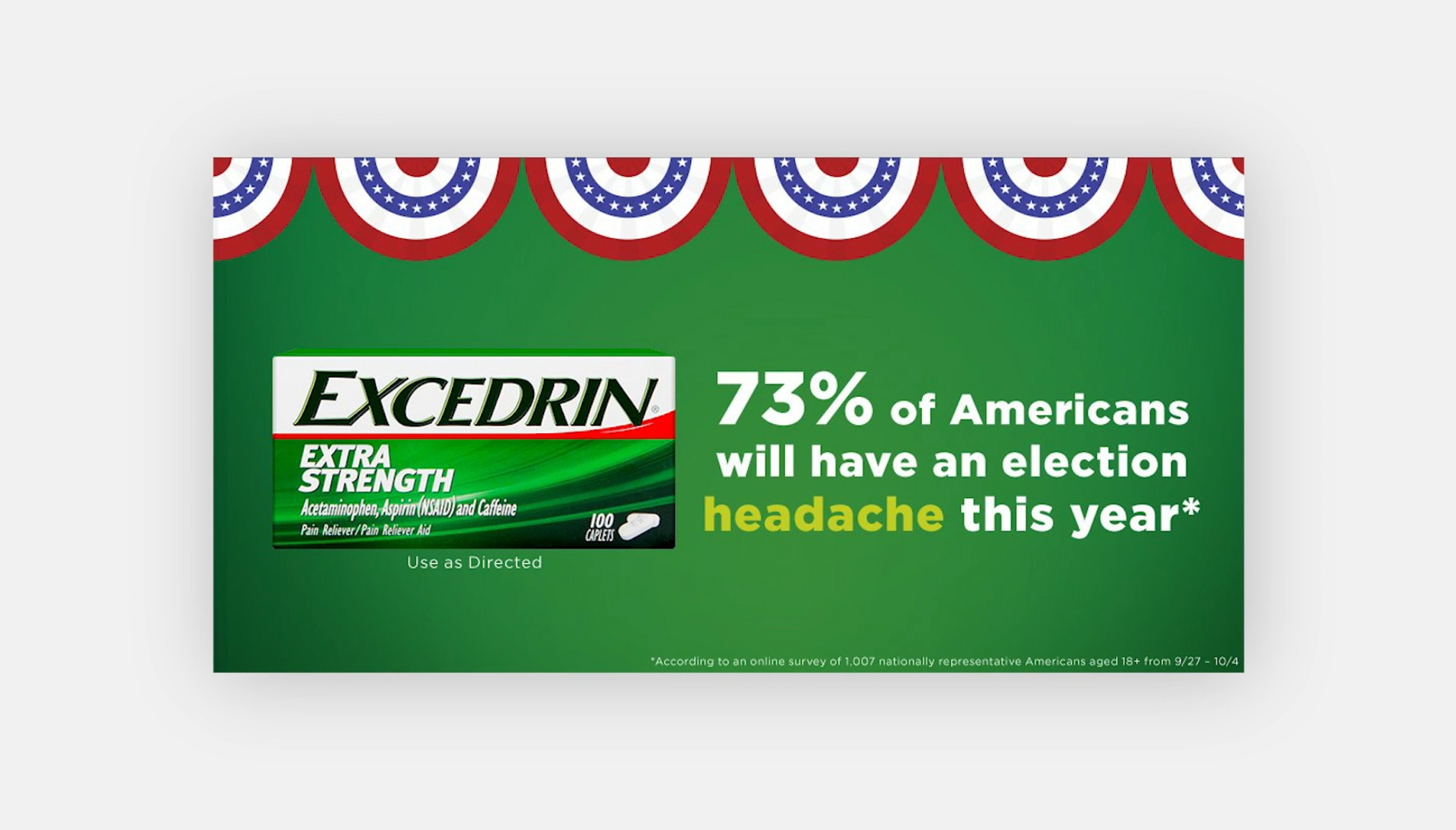
It's a pun. It's timely. It's so specific to that exact cultural moment that it couldn't have run any other year. And it worked because it made people feel like the brand was paying attention to the same world they were living in.
How to use it for your business:
You don't need a national election. You just need to tap into what your audience is experiencing right now.
Chiropractor during Super Bowl: "The morning after the Super Bowl, 47% of Americans are nursing a sore neck from watching on a couch that wasn't made for a 4 hour game. We can help with that."
Sleep consultant during daylight savings: "Daylight savings just stole an hour of sleep from every parent in America. You're welcome to steal it back."
Gym during Thanksgiving: "You're going to eat 4,712 calories on Thursday. We'll be open at 6am on Friday and can help you lose that in x weeks"
Where Hooks Actually Show Up (Hint: Everywhere)
Most people think hooks are just for social media. They're not. A hook is the first sentence of anything someone might decide not to read.
That means:
Your website headline is a hook. If it says "Welcome to [Business Name]" — that's not a hook, that's a yawn. What's the first thing someone should feel when they land on your homepage?
Your email subject lines are hooks. They're the only job the subject line has — to get the email opened. Nothing else matters until that happens.
Your blog post titles are hooks. This one included. (Did you click?)
Your Instagram captions — the first line before the "more" cutoff — are hooks. Everything after that is only read by people the first line earned.
Your Reels and TikTok openers — the first three seconds are your hook. If you start with "Hey guys, so today I wanted to talk about..." you've already lost.
Even your proposals and onboarding emails have hooks. The first sentence someone reads determines whether they read the second one.
How to Write a Hook in 5 Minutes
Stop overthinking it. Here's the process:
Step 1: What's the ONE thing your reader is most afraid of, most frustrated by, or most curious about right now?
Step 2: Pick a hook type — threat, education, confirm beliefs, FOMO, or relevancy.
Step 3: Write three versions. Fast. Don't edit while you write.
Step 4: Read them out loud. The one that makes you feel something is the one.
Step 5: Cut it in half. The best hooks are almost always shorter than your first draft.
That's it. Five minutes. First sentence done.
The Uncomfortable Truth About Hooks
Here's the thing nobody wants to say: you can have the best offer, the most useful content, the most beautiful website — and none of it matters if the first sentence doesn't earn the second one.
Your content isn't failing because you're not posting enough. It's not failing because the algorithm hates you. It's failing because nobody's stopping long enough to read it.
Fix the first sentence. Everything else gets easier.
Ready to write words that actually make people stop, read, and buy?
→ Free: 5 Days of Copy That Sells — five fast lessons on hooks, website copy, Instagram, blog posts, and ads. For small business owners who are done watching their content get ignored.
Make My Words Sell — join free →
→ Done-with-you: If you'd rather have someone just do this for you — let's talk. We'll figure out what your content needs to start working harder.