If it feels like fewer people are finding your business the way they used to, you’re not imagining things.
People still Google.
But they’re also asking tools like ChatGPT and Bing questions like:
“Who should I hire for this?”
“What’s the best option near me?”
“What should I know before choosing a [your service]?”
Instead of clicking through a bunch of links, they’re getting a straight answer.
Which brings up a very real question I’m hearing from business owners lately:
If AI is giving the answers… how does my business end up in the answer?
Let’s talk about that. Calmly. In plain English. Without turning this into a tech spiral.
Do You Need to Understand AI Search to Keep Getting Clients?
Short answer: no.
You don’t need to learn new acronyms or suddenly become an AI expert. What you do need is a general sense of how people are finding businesses now.
AI-powered search works differently than traditional Google results. As Semrush puts it:
“AI search engines that use large language models (LLMs) deliver a single, synthesized response instead of a list of links.”
— Semrush, How to Optimize Content for AI Search Engines
So instead of showing ten options and letting people decide, AI is summarizing information and presenting what it thinks is the most helpful answer.
That means your visibility depends less on clever tricks and more on whether your business is easy to understand and easy to place in context.
Want a Simple Way to Check Your Own Site?
Download the AI Search Visibility Checklist to see what helps your business get found as search keeps changing — and what’s worth fixing first.
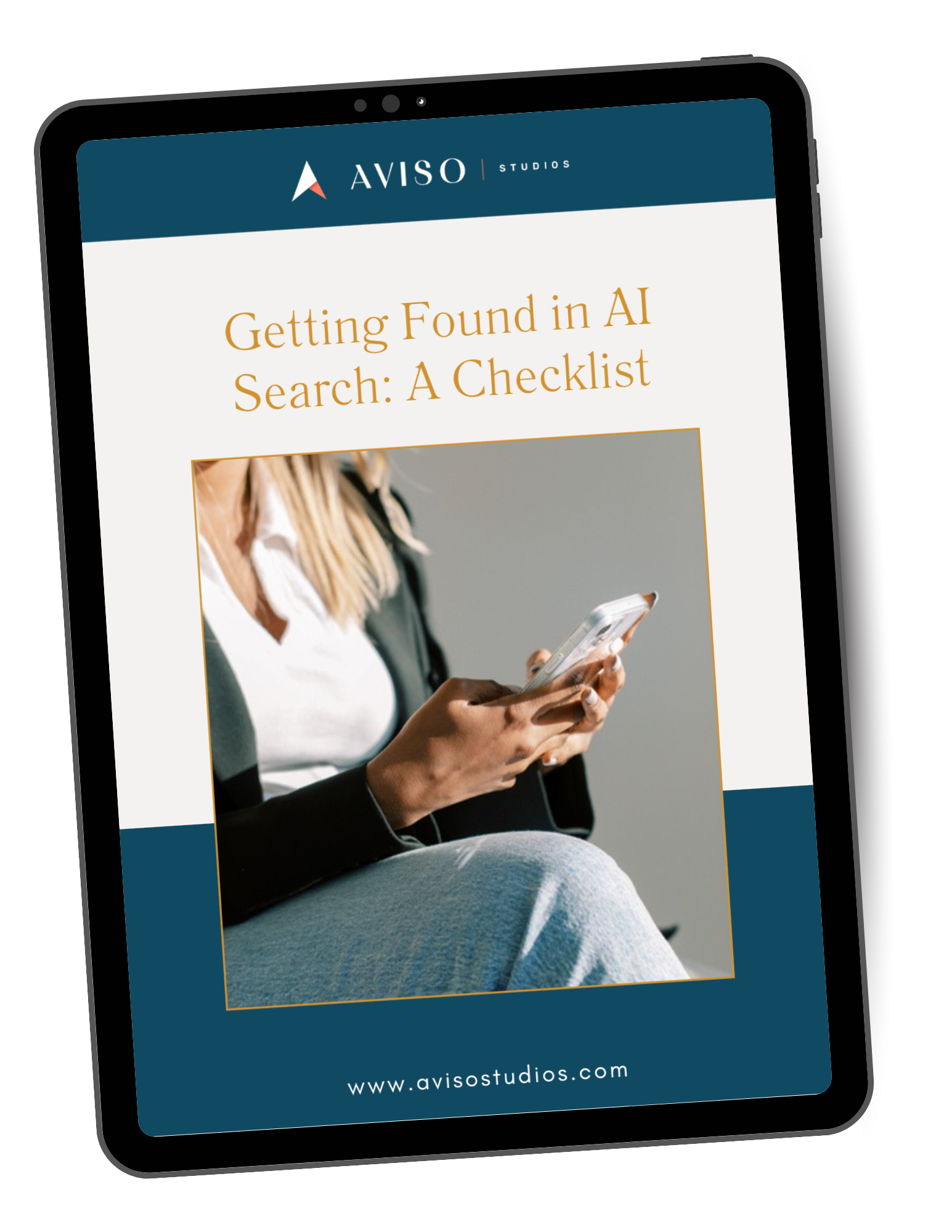
What AI Is Actually Paying Attention To
AI doesn’t experience your website the way a human does. It’s scanning for information it can quickly understand and reuse.
AI tends to pull from content that’s clear, structured, trustworthy, and topically relevant.
Here’s what that looks like in real life.
Can someone quickly understand what you do?
If your website doesn’t clearly explain:
who you work with
what you help with
how someone gets started
why you’re a solid choice
then both people and AI are left guessing.
And when there’s guessing involved, most people move on.
Is your site easy to scan?
Big paragraphs, buried information, and “clever” wording make things harder than they need to be.
Clear headings, short sections, and direct answers help real humans find what they’re looking for. They also make it easier for AI tools to summarize your business accurately.
Semrush also points out that structured content, like FAQs, helps AI systems interpret and reference information more reliably.
You don’t need a bigger website.
You need one that’s easier to follow.

Curious how your site scans right now?
Get a free website audit that shows what’s easy to find, what’s getting missed, and where small changes could help.
Does your business sound the same everywhere?
AI cross-checks information.
If your website says one thing, your Google Business Profile says another, and your services are described differently across the web, trust drops.
Consistency helps reinforce what you do and who you’re for.
| Our Listings & Citation Building Services help with this.
Are there signs your business exists beyond your own website?
AI doesn’t just take your word for it.
Mentions on other reputable sites, directories, or publications help confirm that your business is established and relevant.
This is why being “findable” today isn’t about one magic page. It’s about the bigger picture.
Why This Isn’t Just About Keywords Anymore
For a long time, SEO was mostly about matching keywords.
AI search works differently. It cares more about whether you’ve actually answered the question.
As the Digital Marketing Institute explains:
“When optimizing content for AI-driven search, it’s time to move beyond traditional keyword targeting and start thinking about topics and intent.”
— Digital Marketing Institute, How to Optimize Content for AI Search and Discovery
In plain terms:
If your website does a good job explaining what you do, who you help, and how it works, you’re already doing a lot right.
The Parts of Your Website That Matter Most Right Now
This doesn’t mean you need to start over.
Most small business websites just need a few areas cleaned up and clarified.
Your homepage
Someone should land on your site and quickly understand:
who it’s for
what problem you solve
what to do next
If that’s not obvious, people hesitate. AI does too.
Your FAQs
These should reflect real questions clients ask before hiring you.
Pricing questions.
Process questions.
“Is this right for me?” questions.
Good FAQs help people feel informed and give AI clear answers to pull from.
Your service pages
These pages should explain what working with you actually looks like.
When expectations are clear, it’s easier for someone to say yes.
Your About page
This isn’t about telling your whole life story.
It’s about showing:
who you help
your experience
why your approach works
That context matters more now than it used to.
A Better Way to Think About Your Website Today
You don’t need to build your website for AI.
You need to make sure your business is easy to understand.
Your website is doing a lot of jobs at once:
explaining what you do
helping people decide if you’re a fit
building confidence
and increasingly, serving as a source AI tools reference
When your site communicates clearly and consistently, it works better for all of those things.
How Aviso Studios Fits Into This
Before we design anything, we focus on the foundation.
We help clients:
get clear on who they’re talking to
identify the questions their customers are asking
organize their website so it’s easy to understand and navigate
That helps real people feel confident and helps search engines and AI tools accurately understand the business.
Explore Website Design Services
Want a Second Set of Eyes on Your Site?
If you’re unsure whether your website is helping or quietly holding things back, we can take a look together.
Book Your Strategy Call
I’ll walk through what’s working, what’s confusing, and what’s worth improving next.