Your Business Sounds Like ChatGPT. Here's Why That's Killing Your Sales.
Everyone's Using AI to Write Their Content. Here's How to Make Sure You Don't Sound Like Everyone Else.

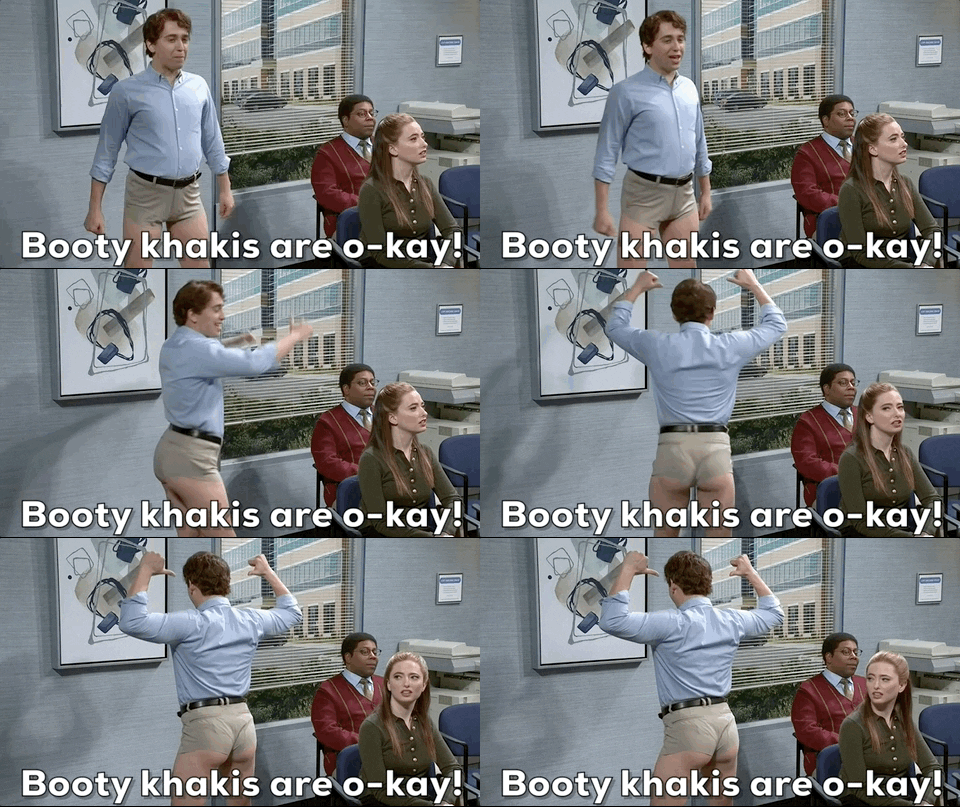
If you don't have a brand voice, you might as well be wearing khakis to a Beyoncé concert.
Technically you're there. Nobody's asking you to leave. But you're absolutely not the person anyone remembers aaaaand you definitely didn't get the memo.
Right now the internet is drowning in polished, competent, utterly beige ChatGPT writing. Your ideal customer lands on your Instagram, skims your posts, clicks to your website and feels nothing. Not turned off. Just neutral. They close the tab. They forget you exist.
The businesses people actually remember — the ones with waitlists, the ones that get screenshotted and shared — you can feel them before you even see who posted it. That's brand voice. And if yours isn't defined? Your competitors are stealing your lunch.
Wait, So What Even Is Brand Voice? (Because Most Definitions Are Useless)
Ask an AI tool what your brand voice is and it'll spit back something like: "warm, approachable, and conversational."
Cool. So is literally every other small business that asked the same question this week.
"Approachable" doesn't tell you how to write an email subject line. "Conversational" doesn't tell you
whether you'd ever drop a well-placed curse word
if your Instagram sounds like a best friend texting or a PR rep managing you
or whether you make jokes about your own hot takes or play it straight.
Here's what brand voice actually is, friendo: it's every micro-decision your writing makes, on repeat, across every single place your business shows up.
Sentence length. Rhythm. Whether you open with a story or a statement. The words you never use (looking at you, "clarity” and “fluff”). The jokes you'd make and the ones you'd cut. Whether you sign off emails with "warm regards" or “you’ve got this sistah”.
It's the thing that makes someone read your caption and think yep, that's them before they've even seen who posted it.
That's not a vibe. That's a system. And right now, it might only exist in your head.
What Brand Voice Actually Looks Like in the Wild
This is the part where it clicks.
Take the same message — "We're booked out for 6 weeks" — and watch what happens when three different brand voices say it:
The Warm & Reassuring brand: "We're currently booked through [date], but we'd love to connect when the timing is right. Join the waitlist and we'll reach out as soon as a spot opens up."
The Confident & No-Nonsense brand: "Booked out 6 weeks. Waitlist is open — grab a spot if you want in!"
The Witty & Personality-Forward brand: "Good news/bad news situation over here. Good news: people love what we do. Bad news: we're fully booked through [date]. Waitlist link is in the bio. Worth it, I promise."
Same information. Completely different voices, yeah? And here's the thing — your reader self-sorts instantly. They read one of those and think that's my people. That's the whole game.
Now let's look at where brand voice actually shows up — because most people think it's just social captions. It's not.

It's your Instagram bio. (Are you "helping small businesses grow online" or are you "the person your website calls when it needs a talking-to"?)
It's your email subject lines. ("Monthly Newsletter — October" vs. "Okayyyy so this happened")
It's your out-of-office reply. (A generic auto-response vs. something that makes people smile and remember you exist)
It's your invoice. (Yes, really. "Payment due upon receipt" vs. "You're officially on the books — here's what's next.")
It's your 404 error page. (The page that says "Page Not Found" vs. the one that says "Well, this is awkward. That page seems to have wandered off. Let's get you back on track.")
It's the little "thanks for subscribing" message nobody thinks about until someone screenshots it and shares it because it made them laugh.
Brand voice isn't a marketing thing you turn on for launch season. It's the connective tissue running through every single touchpoint — from the first Instagram post someone finds to the onboarding email they get after they book. When it's consistent, it builds trust faster than any ad campaign ever could. When it's inconsistent, people feel it even if they can't name it.
That slightly-off feeling? That's what sends them to your competitor. Byeeeeeee.
Why This Matters More Right Now Than It Ever Has
Here's what's happening out there: AI is cranking out content faster than anyone can read it. Which means the internet is getting very, very loud with content that sounds like…nothing in particular.
Technically correct. Completely forgettable.
The brands cutting through right now aren't the ones posting more. They're the ones who have a point of view — a way of saying things that's unmistakably theirs. They are being authentic.
That doesn't happen by accident. It happens because someone, at some point, made intentional decisions about how their brand sounds — and wrote those decisions down.
If you haven't done that yet? Your AI tools are guessing. Your team is guessing. And honestly? Sometimes you're guessing too, depending on the day and how much coffee you've had.
The Loop That's Quietly Draining Your Business
You started the business. You wrote everything. It sounded like you because it was you — unfiltered, real, a little chaotic in the best way.
Then you got busier. Hired a VA. Tried a content tool. Outsourced a few captions. Came back a few weeks later and suddenly your Instagram sounds like LinkedIn, your emails sound like a FAQ page, and your website sounds like it was written by someone who read a lot of marketing blogs in 2018.
Now everyone's guessing what "on brand" means. And you're rewriting everything.
That loop — write, hand off, cringe, rewrite — is the most expensive thing in your business. Not in dollars. In time. In energy. In the slow erosion of the thing that actually made people want to work with you in the first place.
Want to Stop Sounding Like a Robot? Start Here. ⬇️
Before we get into the fix — if you're already nodding and you want something you can use today, grab the free guide: How to Write Blog Posts That Actually Get Found — a checklist, cheat sheet, and AI prompt pack to help your content show up in search without sounding like it was written by a algorithm with a LinkedIn account.
(Psssssssssst blogging is KILLER for improving your SEO)
So What Does Actually Defining Your Brand Voice Look Like?
It means getting the stuff that lives in your head onto paper in a format someone else (or something else) can actually use.
A real brand voice document isn't a two-sentence vibe check. It includes things like:
The words you use on purpose, and the ones you'd never use in a million years
How you handle punctuation (Oxford comma loyalist? Em dash enthusiast? Both, no notes?)
What your humor sounds like and what it doesn't (do you even use humor?)
Sample sentences that are undeniably you, sitting next to ones that aren't
Guidelines for how formal or casual you go depending on the platform
Some brands knock this out in a few short pages. Some go deep with 50. The length doesn't matter. What matters is that it exists — and that a human being or an AI could read it and produce something that sounds like your brand without you having to rewrite it from scratch.
That document is the difference between delegation feeling terrifying and delegation actually working.
The Part Nobody Talks About: You Are Your Brand — Until You're Not
There's a version of running a business where you are the brand. Your personality, your humor, your hot takes, your way of explaining things — that's the whole thing. People buy from you because of you.
That's great, until you want to take a Tuesday off to go thrifting with your bestie without your entire content presence falling apart.
Defining your brand voice isn't about removing yourself. It's about making yourself portable.
It's what lets you bring on help without babysitting every sentence. Use AI tools without wincing at the output. Build a brand that keeps sounding like you, even when you're not the one hitting publish…or if you’re the one hitting publish running on three hours of sleep nursing a wicked hangover.
You built something worth protecting. Your voice is the most distinct thing about it. Don't leave it undocumented.
Here's Where to Start
If you've read this far, you already know whether or not you have this figured out.
You either have a document (great — go review it, they get stale), or you have a vague sense of what "on brand" feels like that lives only in your gut and hasn't been written down anywhere.
If it's the second one: that's the work. And it's worth doing before you hire one more person, outsource one more content batch, or prompt one more AI tool that doesn't know what makes you, you.
Ready to stop rewriting everything and start building a brand that sounds like you — even when you're not in the room?
Two ways to go from here:
→ Free: Join 5 Days of Copy That Sells — five fast lessons on writing words that connect, convert, and actually sound like you. On your website, socials, blog, and beyond. Seriously juicy stuff.
→ Done-with-you: The Brand Strategy Blueprint is where we dig into your brand voice (and everything around it) together — so you walk away with a real, usable system, not just a mood board and some adjectives.
Either way, you can’t go wrong.