The Most Expensive Branding Mistake Isn't What You Think
"Their logo is AI generated. If they can't make the effort to create a logo, they definitely won't make the effort to cook good food. Will not be returning."
That's a real Google review. Left about a real restaurant in Santa Cruz, California. By someone who, based on the logo alone, decided the food wasn't worth it. Similar negative commentary about the logo was plastered around review sites by others in the community and local news outlets and social media groups are having a field day (boy, what is it about rogue otters around here?!)
Not a bad meal. Not slow service. A logo.
Here's the thing: that particular reviewer is wrong about this restaurant, The Salty Otter. The owner — who has 26 years of graphic design experience — used AI as one tool among many, then spent real time customizing, colorizing, and finishing the image herself. The logo wasn't a prompt and a button press. And by most accounts, the food is actually good.
But that reviewer? He's not irrational. He's just human. And he accidentally wrote the most concise explanation of brand psychology I've ever seen in a Google review.
Because that's exactly how perception works.
A Little Backstory On This Branding Mishap
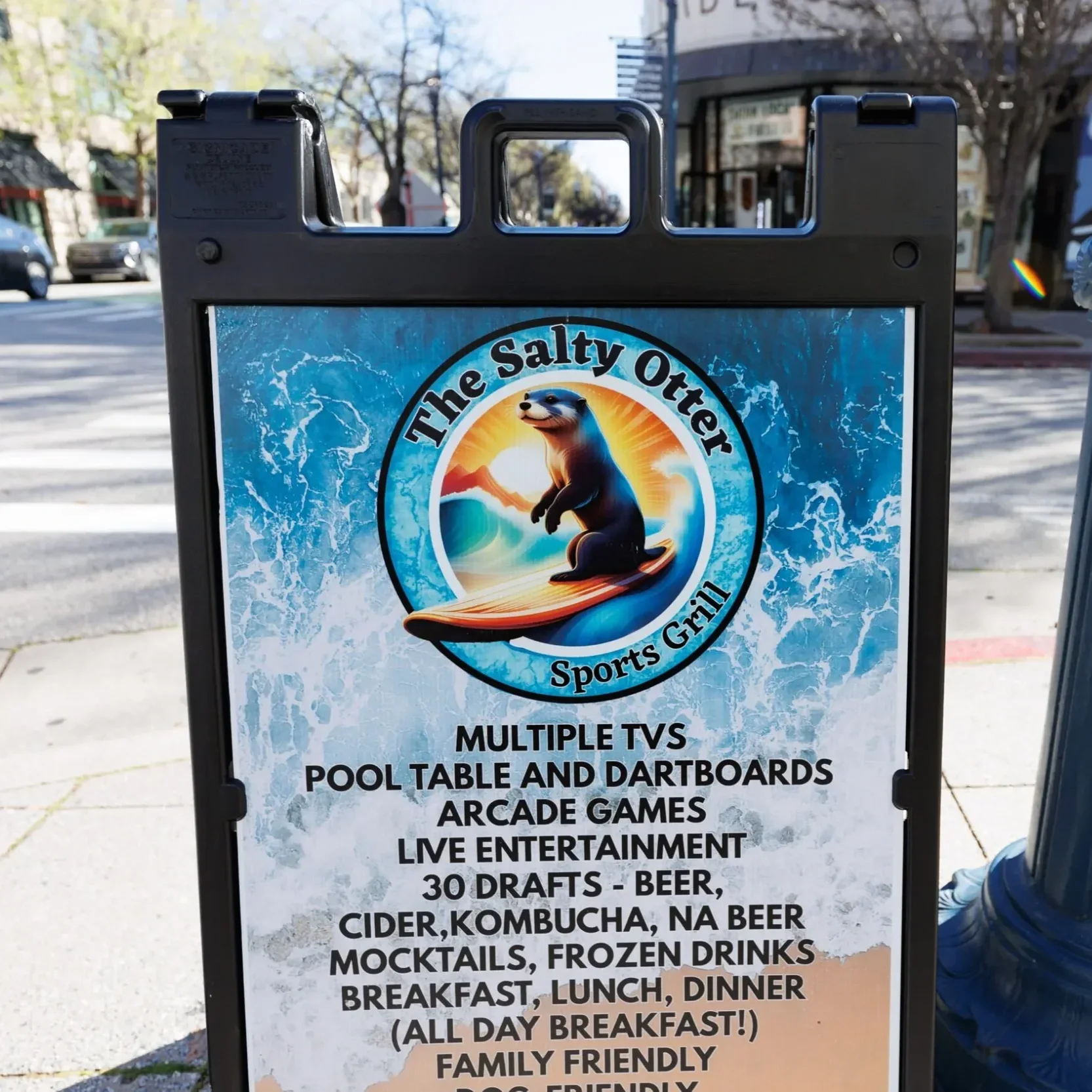
The owner poured 34 years of her life into getting here. She worked two and three jobs to save enough to open this place. She sold a restaurant she'd built in Monterey and put everything into a new spot in Santa Cruz. She even designed the logo to mean something — a river otter, not a sea otter, because she'd moved here from somewhere else just like the otter, and she wanted her brand to say: it's okay to be different, and you're welcome here.
That is a beautiful brand story. Genuinely.
And it got completely buried under a controversy that, with the right strategic foundation in place, might never have started.
That's not a design problem. That's a strategy problem. And it's one that quietly affects small businesses everywhere — with or without a news story attached.
Why Your Brand Is Already Saying Something — Whether You Planned It or Not
Here's an uncomfortable truth about running a business: your brand is giving people an impression of you 24 hours a day, 7 days a week, whether you're paying attention to it or not.
While you're sleeping.
While you’re head down on a project.
While you're on your third coffee wondering why the leads this month are giving you the ick.
Your logo, your website, your visual identity is out there making a first impression on someone who has never heard of you — and forming a judgment about whether you're worth their time and money before they've read a single word you've written.
Research backs this up in a way that should make every business owner put down their Canva subscription and pay attention: consumers form a brand opinion within 90 seconds, and up to 90% of that judgment is based on visual elements alone. Before the copy. Before the testimonials. Before the about page where you explain that you're "passionate about helping people."
And here's the part that stings a little: people aren't consciously evaluating your design choices. They're feeling them. Nobody looked at that restaurant logo and thought "hmm, I detect the aesthetic signature of a generative AI tool." They just got a vibe. And that vibe — trustworthy or cheap, intentional or rushed, us or not us — forms faster than you can say "but wait, let me explain."
When the vibe lands wrong, people don't file a complaint. They just leave. Close the tab. Pick someone else. And you never find out why. Or in this case, the blast their opinions all over the internet. Not fair, but people are peopley and rude sometimes.
The Real Problem Isn't AI. (Or Canva. Or a $50 Logo. Or Any Tool, Ever.)
Let me be very clear about something before this turns into another "AI bad, hire human artists always" conversation, because that's not the point and frankly it's a little too easy.
AI is a tool. Canva is a tool. A logo template is a tool. A discount designer you found on Fiverr is a tool. None of these things are inherently the villain here.
The villain is skipping strategy. And the reason AI and Canva keep showing up in these conversations is that they make it very easy to skip strategy — to go from "I need a logo" to "I have a logo" without ever passing through the part where you figure out what that logo actually needs to communicate.
Because here's what no tool on earth can do for you:
It can't figure out who your brand is actually for — not just demographically, but psychographically. What they distrust. What makes them feel seen. What they need to believe before they'll hand over their credit card.
It can't map the gap between how you see your business and how your audience will perceive it.
It can't identify the specific signals in your market that build trust with your exact person — or the ones that quietly tank it before you ever get a chance.
“Design without strategy is decoration. And decoration doesn’t build a business.”
That's strategy. And it has to come before the logo, before the website, before the color palette, before any of the things that feel like "building a brand" but are actually just the surface layer of one.
When strategy comes first, your visuals aren't just pretty — they're working. They're communicating something intentional to a specific person before you've said a word. They're doing the quiet, invisible labor of building trust before a single interaction happens. And according to Edelman research, 81% of consumers need to trust a brand before they'll even consider buying from it. Eighty-one percent. Trust isn't a soft metric — it's the whole game.
The Part Nobody Says Out Loud: A Phoned-In Brand Signals a Phoned-In Business
Here's the psychological reality of what happened with that logo — and what happens every time a brand looks rushed, generic, or like nobody thought very hard about it:
People assume the product or service is the same way. Ooof. Gutpunch.
It's not rational. It's not fair. But it is completely, predictably human. We use visible effort as a proxy for invisible effort. If the thing you can see looks like you cut corners, the assumption is that the thing you can't see — the food, the service, the work, the care — probably got the same treatment.
That one reviewer literally wrote: "If they can't make the effort to create a logo, they definitely won't make the effort to cook good food."
Brutal? Yes. Logical? Not really — there's zero connection between graphic design choices and culinary skill. But psychologically? That's exactly how perception works. And perception, as any brand strategist will tell you until they're blue in the face, is reality.
This is why brand strategy isn't a luxury or a "nice-to-have once you're making real money." It's the thing that controls the first impression before you ever get a chance to make an actual one. A signature visual identity built on real strategy can increase brand recognition by up to 80% — and 87% of consumers will pay more for brands they trust.
That's not an aesthetic outcome. That's a revenue outcome. Read. That. Again. (please)
The Branding Shortcut That Ends Up Costing Everything
I've watched this pattern play out with small business owners more times than I can count:
They skip the strategy. Save a few hundred bucks on brand development — or a few thousand on a website. And then spend the next 12 to 18 months wondering
Why the marketing isn't clicking.
Why the website feels off. Why the clients coming in aren't quite right.
Why they keep discounting to close.
Why the rebrand they just paid for still doesn't feel like them.
It traces back to the foundation every single time.
When your brand is built on shortcuts — whatever the shortcut was — everything downstream pays for it. Your content has no anchor. Your messaging drifts. Nothing is catastrophically wrong, it just never quite coheres. And people feel that incoherence even when they can't name it.
That slightly-off feeling? That's what quietly (or in this case loudly) sends them to your competitor.
The most expensive branding mistake small business owners make isn't using the wrong tool. It's building without a foundation.
Related: How to Choose a Brand Designer (and Not End Up Paying Twice)
So What Does "Strategy First" Actually Look Like?
It's not a six-month engagement or a 90-page brand document that lives on your desktop and collects digital dust. It's getting ruthlessly clear on a handful of things before you open a single design file:
Who is this brand actually for? Not just "women 30–50 who like wellness." What do they distrust? What do they need to feel before they'll trust you with their money? What are they so tired of seeing in your industry that they could scream?
What do you want someone to feel in the first three seconds of encountering your brand — before they've read a single word?
What already exists in your market, and are you intentionally aligning with those signals or deliberately breaking from them?
What's the story — the real one, the one that makes someone feel something — and is it actually visible in your brand or buried on page four of your about section?
That last one is what breaks my heart a little about the Salty Otter situation. The story was there. A woman who fell in love with a town at 14 years old. Who worked two and three jobs for decades. Who finally made it here, and put that journey into her logo in the form of a little river otter who also came from somewhere else and found his place. That's not a generic brand story. That's the kind of story that makes a neighborhood restaurant feel like theirs.
It just never got built into the foundation where people could actually feel it before the controversy started.
Ready to stop building on shortcuts?
The Bottom Line on Brand Strategy Before Design
The most expensive branding mistake small business owners make isn't using the wrong tool. It isn't choosing AI over a human designer, or Canva over a custom build. It's skipping the thinking that has to happen before any of that.
Strategy first. Always.
The thinking you do before you touch a design file is what determines:
Whether your brand works or just exists.
Whether it builds trust or erodes it.
Whether it attracts the right people or quietly repels them.
What happened to the Salty Otter restaurant was loud and public (and really unfortunate). The quieter version — the slow, invisible cost of a brand built without a foundation — is happening to businesses everywhere, every day. It just doesn't make the news.
Don't let yours be one of them.
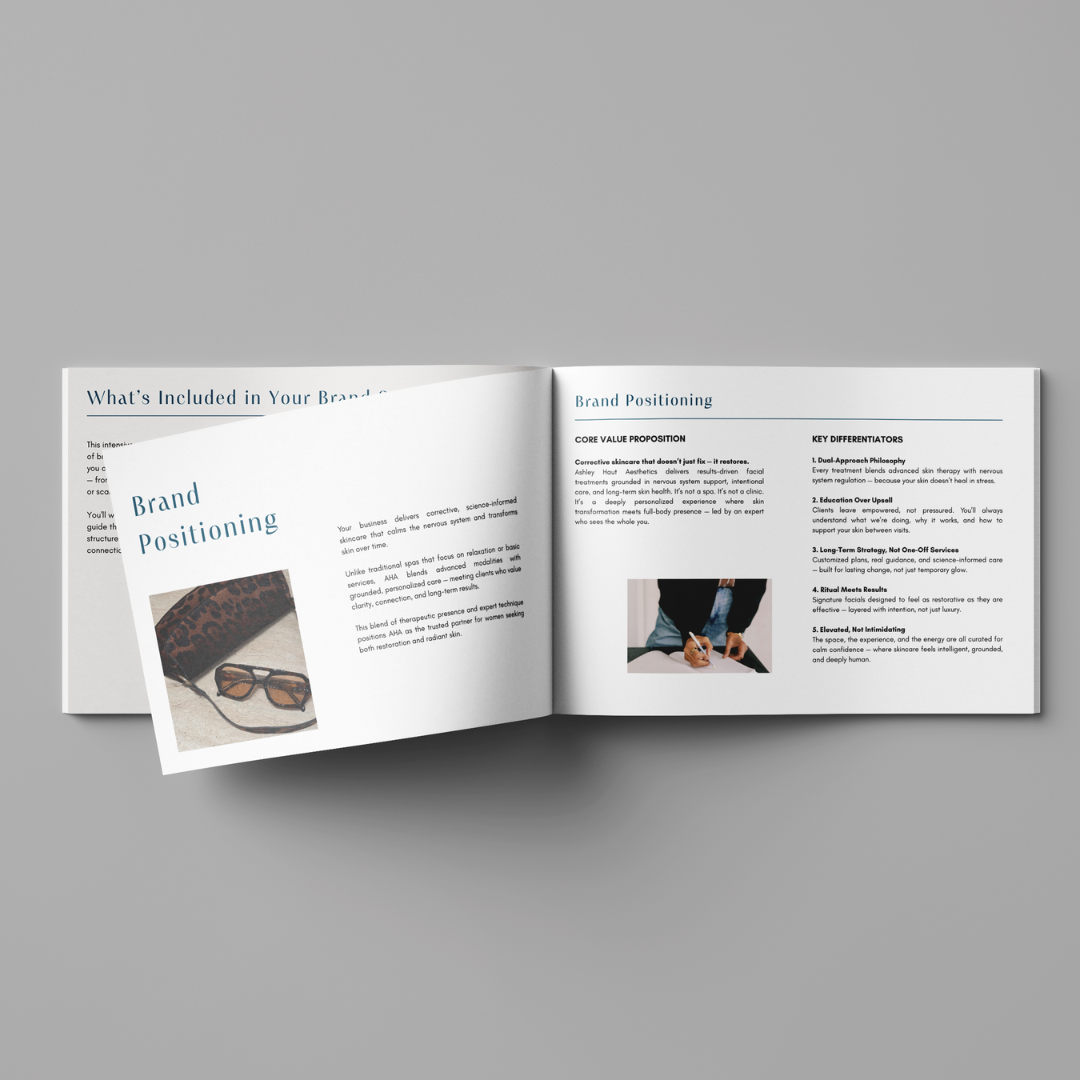
The Brand Strategy Blueprint is where we do the thinking together.
A done-with-you-service where we uncover who you're for, what makes you different, and how to say it in a way that actually converts.
$399, built specifically for your business, no templates, no fluff, no group coaching. Just the foundation that makes everything else finally work.
FAQ: Brand Strategy for Small Businesses
Do I need brand strategy before building a website? Yes — and this is the most skipped step in small business marketing. Your website is the execution of your brand strategy, not the place where strategy gets figured out. Skip this step and you'll be rebuilding sooner than you want to be.
Is AI a bad tool for logo design? AI isn't bad — it's a tool, not a strategist. It can generate visuals but it can't do the thinking that makes those visuals work for your specific audience, market, and goals. That thinking has to come first, regardless of what tool you use to execute it.
What does brand strategy for a small business actually include? At minimum: who you're for (and who you're not), what makes you different, how you want your audience to feel, and the messaging framework that ties it all together. Everything else — logo, website, content, copy — gets built on top of that.
How much does brand strategy cost? It depends on scope. At Aviso Studios, the Brand Strategy Blueprint starts at $399 — a focused, done-with-you intensive that gives you a real, usable strategic foundation without a six-month agency commitment.