Google Just Got Told to Play Fair. Here's What That Actually Means for Your Business.
If you've ever watched your website traffic drop off a cliff after a Google update with zero explanation, zero warning, and zero recourse, this one's for you.
Last week, the UK's Competition and Markets Authority (CMA) did something that has never happened before: they legally ordered Google to be transparent about how it ranks websites. Not asked. Not suggested. Ordered.

And while your first instinct might be to scroll past because "that's a UK thing" — stick with me. Because this is bigger than it sounds, and it's heading our way.
What Actually Happened
The CMA — the UK's competition regulator — has been building a case against Google's search dominance for over a year. In October 2025, they officially designated Google with "strategic market status," which is a fancy way of saying: you're so dominant that we're putting you on a short leash.
This month, they started pulling on it.
Google now has six months to comply with three specific requirements:
Rank search results — including AI Overviews — using objective, consistent criteria. No more moving the goalposts quietly.
Give businesses advance notice before significant ranking changes. You know, like a normal company would do before disrupting someone's livelihood.
Create a formal process for businesses to raise concerns when a ranking change tanks their traffic.
That last one might be the most underrated. Because right now? When Google updates crush your visibility, there is no 1-800 number. There is no appeal process. There is no "hey, can you explain why my site dropped 40 positions overnight?" There's just... silence.
Why This Is a Big Deal Even If You're Not in the UK
Here's what most articles covering this story are missing: the psychological shift this creates.
Google has operated as an unaccountable black box for the entire history of SEO. They've released "helpful" documentation about ranking factors while simultaneously doing whatever they want behind the scenes. Businesses have spent years — and real friggin’ money — trying to reverse-engineer a system that Google has never had any obligation to explain.
This ruling cracks that open. Not all the way. Not yet. But meaningfully.
The CMA isn't the only one watching. The EU has its own Digital Markets Act already in motion. The US Department of Justice is mid-antitrust proceedings against Google as we speak. Regulators across the board are turning the same spotlight on the same problem: Google controls more than 90% of search, and small businesses have had zero leverage when that power is used carelessly.
The UK moved first. Others will follow.
The Part No One Is Talking About: AI Overviews
Buried in the fine print of this ruling is something that should matter a lot to service-based businesses right now.
The transparency requirement specifically includes AI Overviews — those AI-generated answer boxes that now appear at the top of many Google searches. The ones that answer your potential client's question before they ever click through to your website.
Most business owners don't even know AI Overviews exist, let alone that their site may or may not be appearing in them. But Google is pulling content from websites to populate those answers — and until now, there was no obligation to explain why one business got cited and another didn't.
That's changing. And it matters, because AI Overviews are quickly becoming the new "page one." If your site isn't optimized to show up there, you're invisible in a way that didn't even exist two years ago.
Your competitors are showing up in search and AI Overviews. Are you?
SEO + AIO Visibility retainers handle the strategy, the content, the monitoring, and the reporting so you stay visible no matter what Google does next.
What This Means for You Right Now
Let me be real with you: even if these rules spread globally tomorrow, they don't do the work for you. A more transparent Google still rewards the same things a good Google always has.
The sites that weather every update — seen and unseen — are the ones built on fundamentals:
Clear expertise and authority signals (Google needs to know what you do and who you do it for)
Content that actually answers what your potential clients are searching for
A site structure that makes it easy for both humans and AI to understand your business
Consistent trust signals — reviews, backlinks, local presence — that tell Google you're legit
The business owners who panic every time an update hits are usually the ones who built their visibility on shortcuts. The ones who shrug and keep going? They're the ones who did the boring, foundational work that holds up over time.
The Bigger Picture
We are living through a genuine inflection point in how search works. AI is changing what results look like. Regulators are changing the rules of the game. And the businesses that understand both — and build accordingly — are going to have a significant advantage over the ones that are still asking "what even is SEO?"
The black box isn't fully open yet. But the lock is cracking.
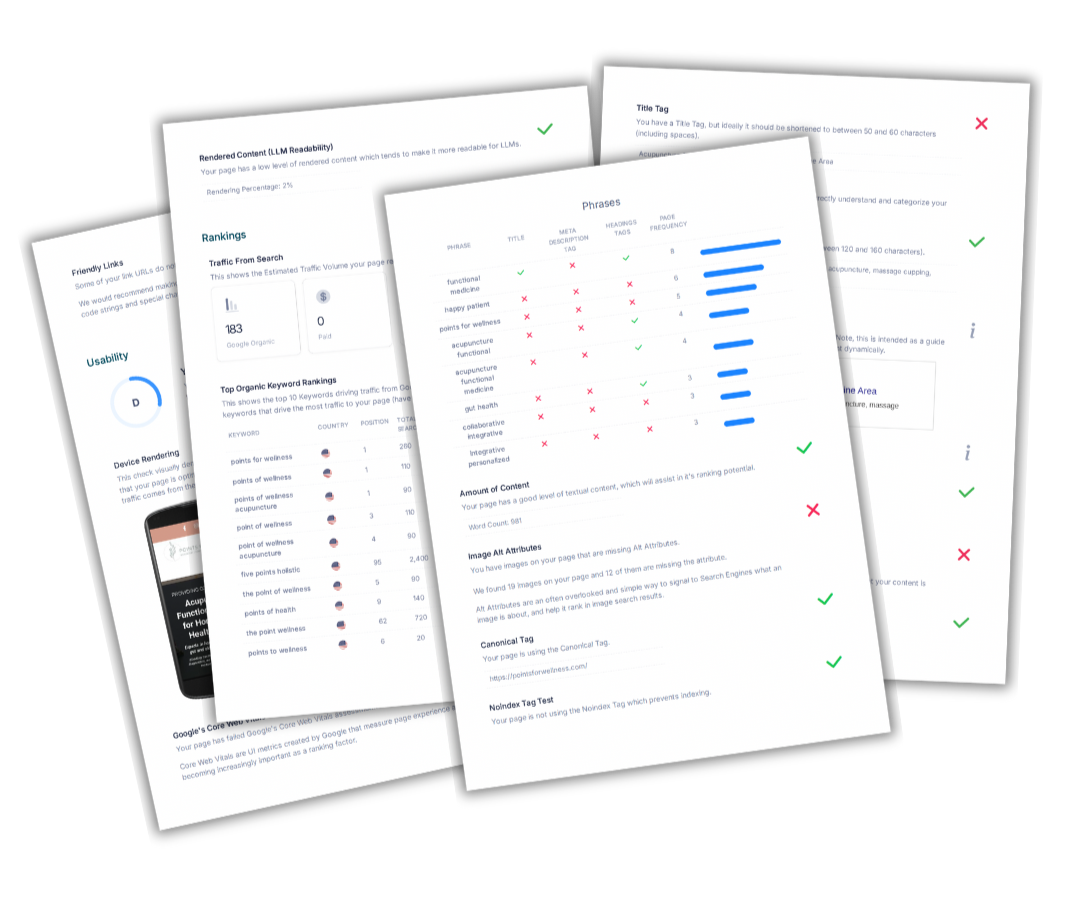
And if you want to know exactly where your site stands — in both traditional search and AI Overviews — right now, before the next update hits? That's exactly what my SEO + AIO Audit is for.
No generic checklist. A real, personalized look at your website's visibility, what's working, what's not, and what to prioritize next.
Because the best time to know where you stand is before things change. And things are changing fast.