How to Create a Brand Experience That Converts (A 5-Pillar Strategy Beyond the Logo)
Most businesses spend far too much time perfecting their logo — and not nearly enough time building the experience behind it.
The truth is, a polished logo won’t save a brand that lacks clarity, connection, or strategy. Customers don’t buy logos. They buy from brands that feel intentional, trustworthy, and easy to understand.
A high-converting brand experience goes far beyond visuals. It’s built on positioning, messaging, content, and consistency — all working together to guide your ideal customer from first impression to confident “yes.”
So, how do you get off the hamster wheel and start building a brand that builds your bottom line? You focus on these five pillars.
Why Branding Alone Doesn’t Convert
The Problem: You’re Focused on the Wrong Things
You think branding is about looking good. And yes, a polished visual identity is part of the game. But it's the last part, not the first.
When you lead with visuals alone, you’re in the fast lane to blending in. You become another pretty face in a sea of forgettable competitors.
The real issue isn’t your visual identity — it’s the lack of a clear strategy behind it. Without one, your brand struggles to differentiate, connect, and convert consistently.
The Solution: Build a Brand Experience, Not Just a Visual Identity
Ready to build a brand that works as hard as you do? It all starts with strategy. Let's break down the five non-negotiable pillars that separate the brands that get ignored from the brands that get iconic.
1. Define Your Ideal Customer to Improve Your Brand Experience
Everything starts here. Everything.
If you don’t know exactly who you’re talking to—their secret fears, their “I wish someone would just fix this” problems, their ultimate aspirations—your message will land with a deafening thud.
As marketing guru Neil Patel constantly preaches, you have to niche down to scale up. Don’t talk to "everyone." Talk to your one person with laser-focused empathy. When they read your words, they should feel like you’ve been reading their diary. That’s when the magic happens.
2. Nail Your Scroll-Stopping Position
Does your ideal client instantly get what you do and why it’s the answer to their prayers?
A generic pitch like “We offer creative branding solutions”? They yawn, right. And keep scrolling.
But a crisp, clear statement of value? That’s a scroll-stopper.
Neil calls this “identifiable positioning.” I call it the strategic glue that holds your entire brand together. It’s the answer to the question: “Why should I choose you over everyone else?” If you can’t answer that in one sentence, your customers can’t either.
Example: Instead of "We build websites," try "We build high-converting Shopify sites for ambitious female founders." See the difference?
If you can’t explain why someone should choose your brand in one clear sentence, your audience won’t figure it out for you.
See how strategic brand positioning works →
3. Use Content Marketing to Build Brand Trust and Loyalty
Want to build unshakable trust? Stop telling people you’re an expert and start showing them.
Content is your superpower.
Blog posts, case studies, behind-the-scenes videos—this is your proof. This is where you build authority and turn skeptical prospects into eager buyers. The data doesn't lie: companies that blog consistently generate 67% more leads than those that don't. Your content isn't just filler; it's a core asset that builds relationships and delivers massive ROI.
Strategic content shortens the trust gap and accelerates buying decisions — especially for service-based businesses.
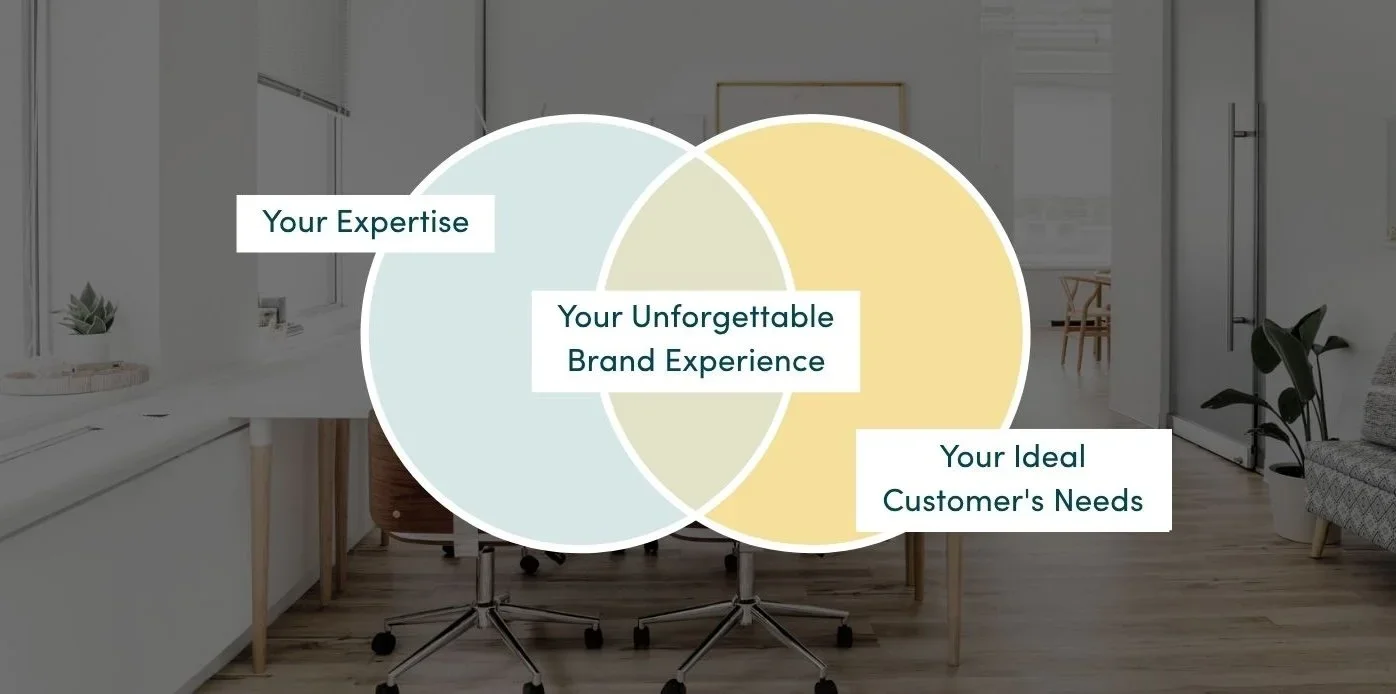
From "Just Another Option" to the "Only Option"
Okay, let's connect the dots. You've defined your customer, nailed your positioning, and you're creating killer content. Now what? You need a map.
4. Map the Customer Journey (Not Just the Pretty Parts)
How do new people find you, and what’s the very next thing you want them to do?
Your brand needs a clear action roadmap. From a social media post to your email list. From a first click to a final sale. This is where your brand strategy meets your sales funnel.
Brands that align both, win. You don’t just leave breadcrumbs; you pave a brightly lit path straight to your checkout page.
If your brand doesn’t clearly guide people from interest to action, conversion suffers — no matter how good it looks.
5. Amplify with Visuals (The Final Polish)
See? We finally got to the pretty stuff.
Visuals are the amplifier, not the foundation. Once your strategic core is rock-solid, a consistent visual identity is what makes it memorable.
According to a report highlighted in Forbes, presenting a brand consistently across all platforms can increase revenue by up to 23%. Your logo, colors, and fonts become mental shortcuts for the trust and value you’ve already built. When people see your signature look, they don’t just see colors; they feel the entire experience.
That’s the secret sauce of loyalty and repeat business.
The Bottom Line
A brand that converts isn’t built on aesthetics alone. It’s built on strategy, clarity, and a cohesive experience that makes customers feel confident choosing you.
If your brand looks good but isn’t driving the results you want, the issue isn’t design — it’s what’s underneath it.
Ready to build a brand experience that actually converts?
Let’s map out a strategy that works across your website, content, and customer journey.