Wellness Business Website Design: 5 Essential Pages That Attract & Convert Clients
What if the most valuable page on your wellness business’ website isn't your homepage?
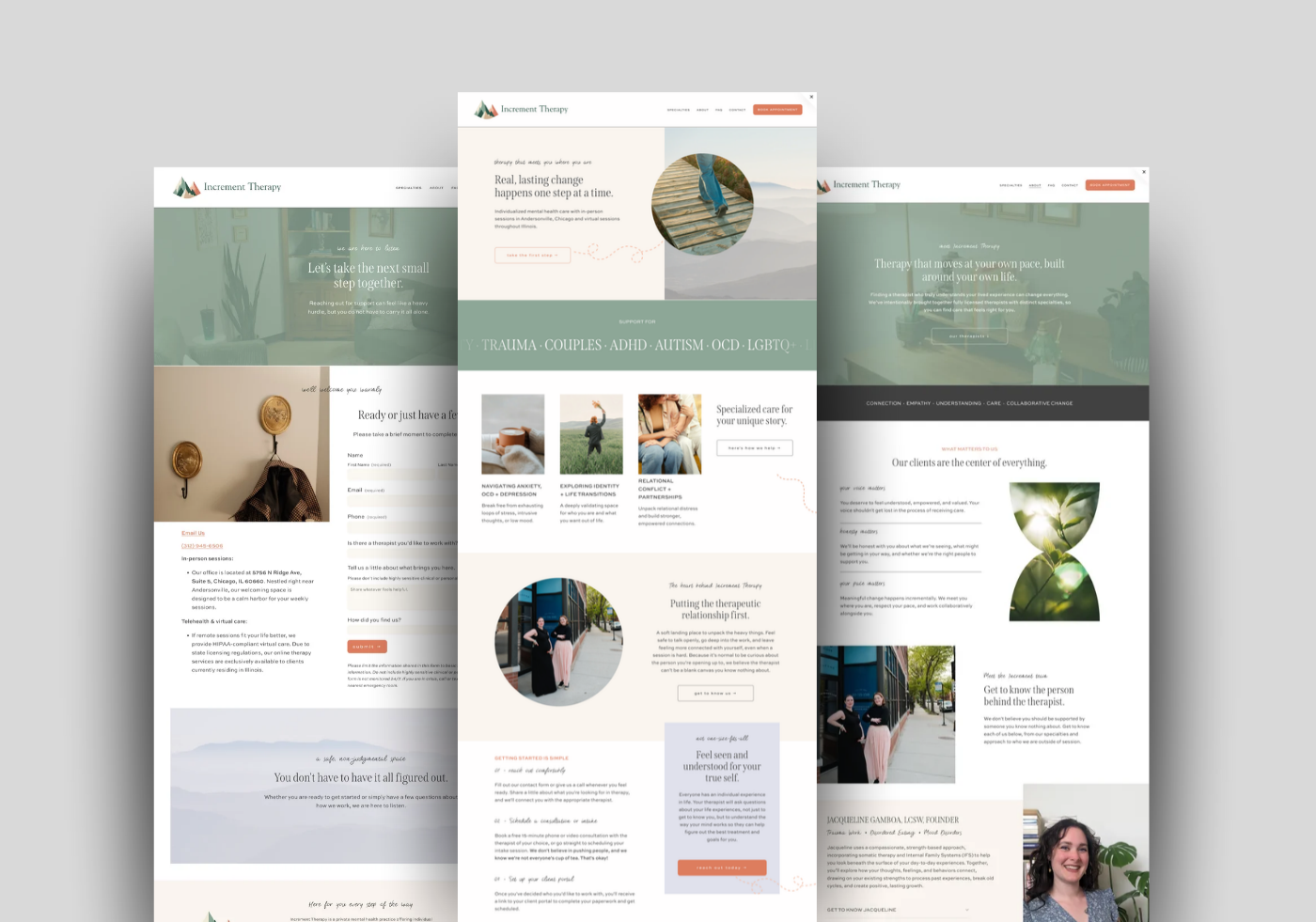
Someone searching for a physical therapist in their neighborhood, researching treatment options for chronic pain, or comparing local chiropractors may never see your homepage before deciding whether to contact you.
They might land on a service page, read a practitioner bio, or find a case study that answers a question they've been struggling with.
Every one of those pages is an opportunity to get found in search, earn their trust or lose their interest.
And that's where strategic website design makes a difference. It's not just about creating a beautiful online presence. It's about understanding how prospective clients find your practice, what information they need to make a decision, and how to guide them from that first visit to an inquiry or appointment.
After working on website and marketing strategies for countless wellness practices, I've found that five types of pages deserve particular attention. Here's what belongs on each, what often gets overlooked, and how to make them work harder for your business.
1. Homepage: Say who you help and what you do, fast
Your homepage has a lot of responsibility. It needs to introduce your business, build trust, communicate what makes you different, and point people in the right direction. All without overwhelming anyone.
One of the most common problems I encounter? A homepage that assumes visitors already understand the business.
It opens with a lofty statement about healing and transformation. Or jumps straight into specialized treatments that mean very little to someone outside your profession.
I've also seen gorgeous wellness websites with messaging so vague you could swap in another business name and nobody would notice.
That's a problem. A BIG HAIRY COMMON ONE.
Lead with relevance. Your homepage needs to establish what you do, who you help, and where you practice before diving into the details.
From there, build on that introduction with:
Your services: A concise overview with links to dedicated service pages (Pages. Plural. We’ll get to this in a minute).
What sets you apart: Your specialties, approach, experience, or philosophy of care.
Trust signals: Credentials, authentic photography, reviews, and professional affiliations.
Clear next steps: Opportunities to explore services, meet practitioners, or schedule an appointment.
The order matters. Someone unfamiliar with what you do needs context before they can appreciate everything that makes it special.
And check the mobile experience. A headline that looks fantastic on desktop can occupy an entire phone screen, pushing important information out of view.
Try this: Open your homepage on your phone and pretend you've never heard of your practice. Can you understand what it does without scrolling or deciphering industry terminology?
2. About Page: Give people a reason to choose you
Choosing a wellness provider is personal.
People want someone qualified. But a list of credentials rarely tells the whole story.
They also want to understand your approach, what working with you might look like, and whether you're a good fit.
That's your About page's job.
While developing the website strategy for a psychotherapy practice recently, one of the biggest themes was the relationship between therapist and client. The practice emphasized finding the right fit, meeting clients where they are, and building the kind of trust that supports meaningful progress.
That belonged front and center. Burying it beneath a list of certifications would have hidden one of the very things that made the practice different.
Your About page can communicate:
Your background: Qualifications, experience, and specialties.
Your philosophy of care: How you approach your work and what guides your decisions.
What makes your practice different: The qualities and experiences clients genuinely value.
The people behind the business: Authentic photography and introductions that help visitors feel familiar with your team.
Have more than one provider? Consider individual practitioner pages. Visitors get room to explore each person's specialties, credentials, and approach. These pages can also support searches for specific practitioners and their areas of expertise.
One of my favorite research exercises is reading a practice's Google reviews. Not simply checking the star rating, but looking for patterns.
Do people consistently mention feeling heard? Appreciating thorough explanations? Feeling comfortable asking questions?
Those patterns tell you what clients value most and can inform your website messaging using language your clients actually use.
Try this: Read your About page and swap in another practitioner's name. Does most of the copy still work? There's your opportunity to get more specific.
3. Service Pages: Match what you offer to what people search
This is where I see some of the biggest missed opportunities for SEO and bookings.
Many practices list every service on one long page. A short description of each treatment, maybe a photograph, and a booking button somewhere at the bottom.
It's tidy, but visitors don't get much information and its terrible for showing up in Google and AI recommendations. And it can be difficult to address the different questions and search intentions associated with each service.
For most established practices, giving each key service its own page creates a stronger foundation for Google, AI search visibility, and conversions.
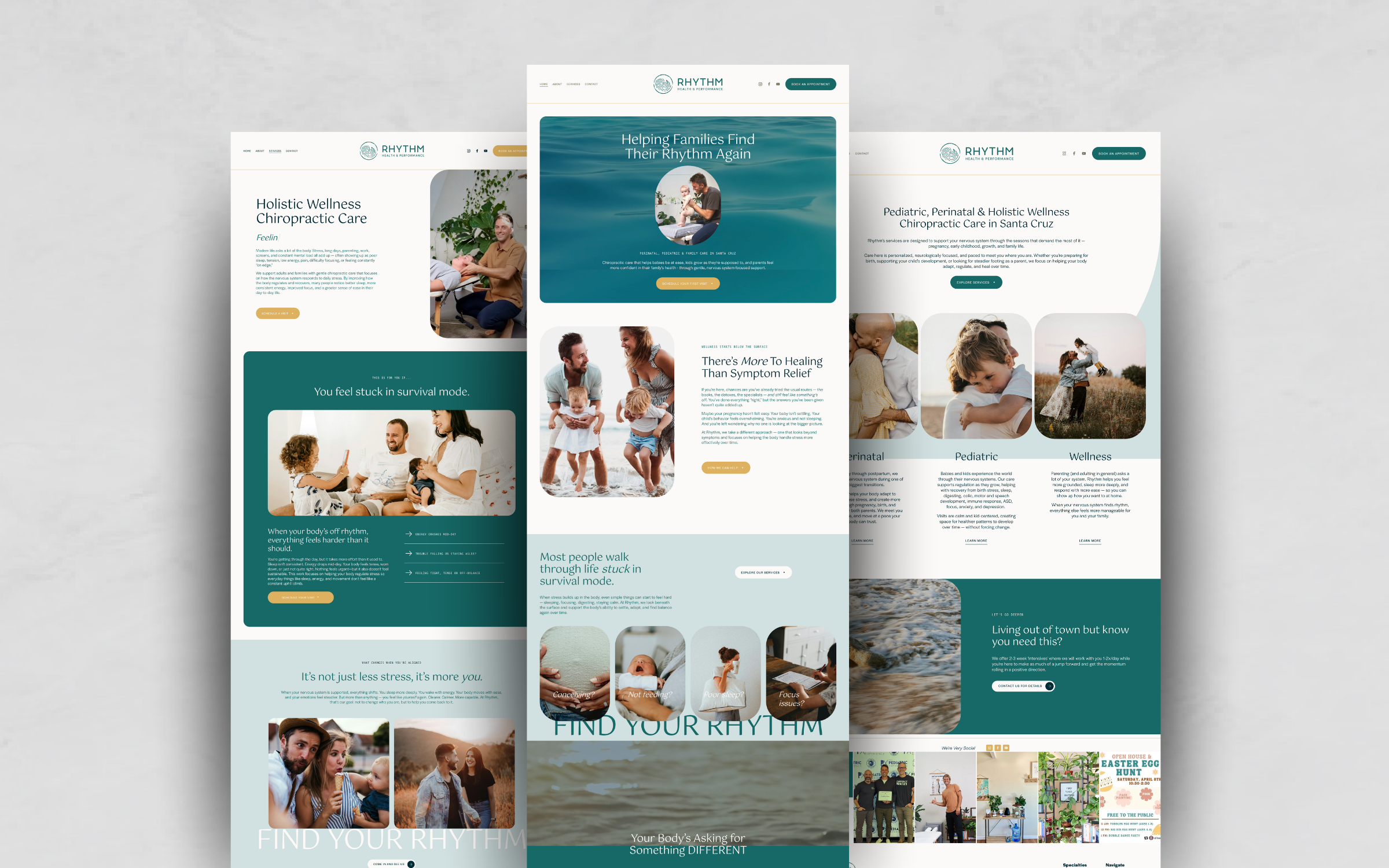
Each service page can cover:
What the service involves and who it's intended for.
The concerns it may help address, using accurate, evidence-informed language.
What happens during an appointment.
Which practitioner provides it.
Common questions about cost, preparation, or availability.
How to book or learn more.
But how you organize those pages matters just as much.
A few months ago I mapped out the website strategy for an integrative wellness practice offering a looooooong list of services. The owner described it as essentially having 12 businesses under one roof. (More common than you might realize BTW).
That's an interesting challenge.
The way practitioners organize their expertise isn't necessarily how prospective clients search for help.
Someone experiencing headaches may have no idea whether to explore IV therapy, acupuncture, or another service. Someone else knows exactly which treatment they want.
A well-organized website can serve both by allowing people to explore by treatment, health concern, or practitioner.
This matters for Google and AI-powered search tools, too.
Clear page topics, descriptive headings, relevant internal links, and detailed practitioner information help search systems understand what your practice offers and how its content relates to specific questions.
There's no secret trick for getting recommended by ChatGPT or appearing in Google's AI Overviews. But useful, accurate, well-organized content creates a stronger foundation for being discovered and referenced.
Try this: Read your services page like a brand-new client. Is everything explained in plain language? Could someone find the right service without already knowing its name?

Your website looks good. But is it doing its J.O.B.?
Before you invest in a redesign or another marketing campaign, get clear on what's working, what's missing, and where your biggest opportunities are.
EXPLORE THE BRAND STRATEGY INTENSIVE →
The business owners that start here have the most success with their other marketing efforts.
4. Blog & Resources: Answer the questions people already ask
A blog can be one of your most valuable tools for building search visibility and credibility.
But publishing content simply to keep your blog active isn't much of a strategy.
I see practices spend hours creating articles that have little connection to their services, their clients, or the searches they actually want to appear in.
Start with search intent instead. What is someone looking for, and why?
Take a physical therapy practice. Someone searching for an ACL recovery timeline is at a different stage than someone searching for an ACL rehabilitation specialist in their city.
Both searches are relevant. They call for different content.
Your blog can answer those early questions, demonstrate your expertise, and direct readers toward relevant services when they're ready.
This is also where SEO, GEO (generative engine optimization), and AI search optimization overlap.
People increasingly ask detailed questions through Google, ChatGPT, and other AI-powered search experiences. Content that answers those questions directly, demonstrates real expertise, and includes credible supporting information gives search systems useful material to discover and potentially reference.
For health-related topics, accuracy is especially important. Identify qualified authors or reviewers where appropriate, cite reputable sources, and avoid unsupported treatment claims.
And don't forget internal linking.
An article about what to expect at your first physical therapy appointment can link to your physical therapy services page. A post about choosing a therapist can introduce relevant practitioner profiles.
Those connections help visitors explore your website while giving search engines additional context about how your content fits together.
Try this: List the questions clients ask repeatedly during appointments, consultations, or discovery calls. That's an excellent starting point for your content strategy.
You don't need to publish every week. I'd much rather see a handful of genuinely useful, well-researched articles than dozens of thin posts written just to chase keywords.
5. Contact & Booking Page: Make the next step ridiculously easy
Someone found your practice, explored your services, liked your approach, and wants to schedule.
Fantastic.
Now don't make them jump through hoops.
Your contact or booking page needs to remove unnecessary friction and answer the practical questions people have before making an appointment.
Include:
One clear next step: Book an appointment, request a consultation, or submit an inquiry.
Scheduling information: A direct booking link or explanation of how appointments are arranged.
The essentials: Location, virtual availability, insurance, and payment information where relevant.
What happens next: Who responds and when someone can expect to hear back.
Mobile-friendly functionality: Forms and booking tools that work smoothly on a phone.
Offer several services or work with multiple practitioners? Think about how a first-time visitor determines which appointment to book.
They may need more guidance than an established patient.
And the experience doesn't end when someone clicks Submit. Confirmation messages, follow-up processes, and reliable inquiry management all influence whether an interested visitor becomes a client.
One more thing: If your forms collect health information, make sure the platform and workflow meet applicable privacy requirements. Many standard website form builders aren't designed to handle protected health information under HIPAA.
Try this: Go through your entire booking process on your phone. Better yet, ask someone unfamiliar with your practice to try it and tell you where they get confused.
Related:
5 Essential Elements of a High-Converting Contact Page (For Small Businesses)
This One Contact Page Mistake Is Costing You Clients (Here's the Exact Fix)
What Legal Pages Does a Website Need? (The No-Panic Guide for Small Business Owners)
Beyond the Five Pages: The Details That Make a Wellness Website Work
Five strong pages are your foundation. How they connect matters just as much.
A few things I pay particular attention to:
Visual identity: Your website needs to reflect your practice. Not every wellness business needs sage green, beige, and stock photos of someone meditating on a rock. A sports performance clinic and a psychotherapy practice have different audiences and personalities.
Navigation: Make important information easy to find. The more services and practitioners you offer, the more attention your website structure deserves.
SEO foundations: Page titles, descriptive headings, internal links, image optimization, website performance, and consistent business information across your website, Google Business Profile, and relevant directories.
Accessibility: Readable typography, sufficient contrast, descriptive links, and layouts that work across devices help more people use your website.
Calls to action: Match the next step to the content. Someone reading an educational article may want to explore a related service before they're ready to book.
None of these details is particularly glamorous. But together, they influence how effectively your website works for your business.
Is Your Website Keeping Up With Your Practice?
Your practice has probably changed quite a bit since launch day. Your website needs to reflect the business you're running now.
That doesn't automatically mean starting over.
Sometimes the biggest improvements come from sharper messaging, better-organized services, stronger individual pages, or a smoother booking process.
Imagine a prospective client landing on your website, finding the information they need, understanding which service or practitioner might be right for them, and feeling confident enough to take the next step.
That's the experience we're working toward.
Ready for a website that fits the practice you're running today?
At Aviso Studios, I combine brand strategy, website design, SEO, and conversion-focused copywriting to create websites that reflect your business and help the right people find you.
Need a refresh? If your website has good bones but needs stronger messaging, organization, or SEO, explore our website design and optimization services.
Outgrown your website? A custom Squarespace website brings strategy, design, content, and search visibility together in a cohesive experience. Explore Website Design.
Not sure what you need? Schedule a discovery call and we'll talk through your business and goals.
Frequently Asked Questions About Wellness Website Design
How many pages does a wellness website need?
Most practices benefit from five core areas: a homepage, About page, service pages, blog or resource library, and contact or booking page. Practices with multiple services or providers often benefit from additional dedicated pages.
Does every wellness service need its own page?
Not necessarily, but important services with distinct audiences, questions, or search intent often benefit from dedicated pages. These allow you to provide more useful information and optimize for relevant searches.
How can my wellness website appear in ChatGPT or Google's AI Overviews?
There are no guaranteed placements. Clear service information, detailed practitioner profiles, useful educational content, accurate business details, and credible sources help make your website easier for search systems to understand and potentially reference.
Is Squarespace a good platform for wellness practitioners?
For many small and midsize practices, yes. Squarespace offers flexible design, built-in SEO features, and straightforward content management. Practices requiring specialized healthcare integrations or patient-data workflows need to evaluate those requirements separately.
About the Author
Liz Kroft is the founder of Aviso Studios, a boutique brand strategy, website design, and SEO studio based in the Santa Cruz area of California. With more than a decade of experience running and marketing small businesses and a Digital Marketing certificate from Harvard Business School, she brings both business-owner perspective and marketing expertise to her work with wellness practitioners and service-based businesses.